





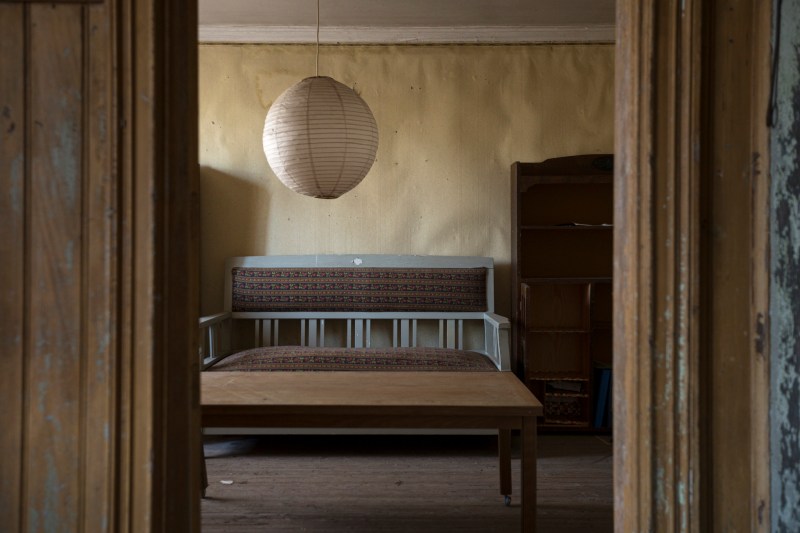



Sågverksindustrin spelade en central roll under 1800-talet när Sverige utvecklades från jordbruksland till industrisamhälle.
Under mitten av 1800-talet effektiviserades den svenska sågverksindustrin med utvecklingen av ångsågen. Stora skogsområden hade övergått till bönderna och nybildade sågverksbolag köpte upp avverkningsrätter. Sågverkens beroende av lokal råvara gjorde att svensk industri i stor omfattning lokaliserades till landsbygden.
I skogen arbetade huggare och körare och på brädgårdarna slet stabbläggare. Vid hamnar och lastageplatser skötte både män och kvinnor lastning av fartygen. Barnarbete förekom i stor utsträckning vid de flesta sågverken.
Under sågruschens första tid utvecklades ett inneboendesystem som ledde till stor trångboddhet. Vägglöss och annan ohyra skapade hälsofarliga livsvillkor och lungtuberkulosen skördade många offer bland barn och vuxna.
Vid slutet av 1800-talet fanns 40,000 anställda vid sågverken och trävaror svarade för 40 procent av svensk export.
Juni 2021
—
The house she wanted to buy
Workers’ housing built in the 1880s, in connection with sawmill industry, Uppland, Sweden.
The sawmill industry played a central role throughout the 19th century when Sweden transformed from an agricultural-based economy to an industrial country.
The development of the steam-powered sawmill throughout the middle of the 19th century greatly streamlined the Swedish sawmill industry. Large forest areas had been passed on to farmers and newly formed sawmill companies acquired felling rights. As the sawmills were dependent on local raw materials, Swedish industry largely came to be localized to the countryside.
Fellers and drivers worked in the forest and stackers labored in the lumber yards. At ports and loading docks, both men and women handled loading of the ships. Child labor was frequent at most sawmills.
During the early days of the sawmill rush, a lodger system was developed that led to extensive overcrowding. Bed bugs and other vermin created unsafe living conditions and pulmonary tuberculosis claimed many victims among children and adults.
At the end of the 19th century, there were 40,000 employees at the sawmills, and wood products accounted for 40 percent of Swedish exports.
June 2021
 Tomma rum